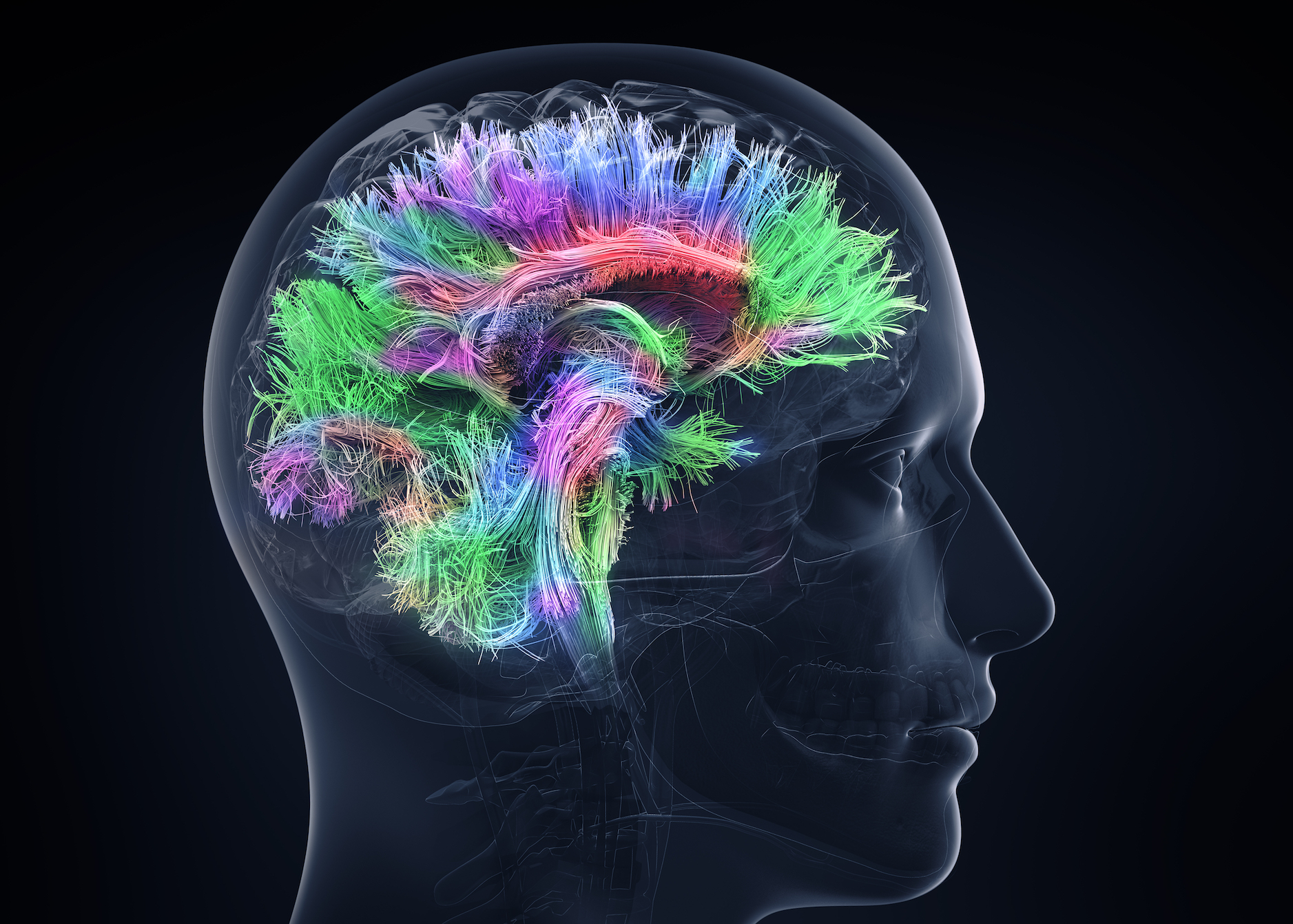
You've probably had the experience of meeting someone new, hearing their name, and forgetting it within minutes. Or studying something carefully, only to find it gone by the following morning. Memory can feel unreliable — a system that keeps its own rules and rarely explains them. But memory isn't random. It follows patterns that neuroscientists have been steadily mapping for decades, and understanding even the basics of how your brain stores information can shift how you approach learning.
This article takes a walk through the core mechanisms of human memory — from the initial spark of a new experience to the long-term storage that lets you recall a childhood moment decades later. Along the way, we'll look at what those mechanisms mean in practical terms: the habits and conditions that tend to support strong retention versus the ones that quietly undermine it.
The Three Stages of Memory Formation
Memory formation isn't a single event. It unfolds across three distinct stages: encoding, storage, and retrieval. Each one plays a role in whether a given piece of information becomes part of your lasting knowledge or fades away.
Encoding is what happens first. When you encounter something new — a fact, a face, a sequence of events — your brain begins converting that experience into a neural signal. Encoding is heavily influenced by attention. Information you engage with deeply, relate to other things you know, or find emotionally resonant tends to encode more effectively than information you merely skim past.
Storage is the process of holding that encoded information over time. Not all memories are stored the same way or in the same place. The brain maintains several types of memory storage, each suited to different kinds of information and different time scales. Short-term (or working) memory holds a small amount of information for seconds to minutes. Long-term memory can hold vast amounts of information for years, or even a lifetime.
Retrieval is the process of accessing stored memories when you need them. This is where many people find memory frustrating — the information seems to be there, but can't quite be brought to mind. Retrieval is not just a passive playback; it's an active reconstruction. Each time you recall a memory, you're reassembling it from stored components, which is why memories can shift slightly over time.
The Hippocampus: Your Brain's Memory Switchboard
Deep within the brain, tucked into the medial temporal lobe, sits a seahorse-shaped structure called the hippocampus. It's not where memories are ultimately stored, but it plays a critical role in forming and organising them — particularly the kind of memories that involve facts, events, and experiences (what researchers call declarative or explicit memory).
The hippocampus acts as a kind of indexing system. When you learn something new, it helps link the different sensory and conceptual pieces of that experience together into a coherent memory trace. It also plays a central role in consolidation — the process by which new memories become more stable and less vulnerable to interference.
Damage to the hippocampus, as seen in certain neurological conditions, can make it impossible to form new long-term memories while leaving older memories largely intact. This observation has been enormously informative to researchers studying how memory storage works — and where memories ultimately end up once the hippocampus has done its consolidation work.
Memory is not a recording of experience. It is a construction — shaped by attention, emotion, and the existing knowledge you bring to each new encounter.
Synaptic Plasticity: How Memories Become Permanent
At the cellular level, memory formation comes down to something called synaptic plasticity — the brain's ability to change the strength of connections between neurons. The key principle is often summarised as: neurons that fire together, wire together.
When two neurons activate in close succession — say, because you're linking a new word to its meaning — the synapse between them can become strengthened. This is called long-term potentiation (LTP). The more times those two neurons fire together, the more robust that connection becomes. Over time, with enough repetition and consolidation, a pattern of neural activation becomes a stable memory.
This is why repetition supports memory. It's not just a strategy someone made up — it reflects what's literally happening at the level of synapses. Each time you revisit information, you're reinforcing the neural pathways that represent it, making future retrieval faster and more reliable.
Conversely, connections that are rarely used tend to weaken — a process called synaptic pruning. The brain is economical; it doesn't maintain pathways that seem unnecessary. This is why knowledge that isn't revisited tends to fade, and why the timing and frequency of review matters so much for long-term retention.
Working Memory and Its Limits
Before anything makes it into long-term memory, it passes through working memory — the brain's temporary workspace. Working memory is where you hold and manipulate information in the short term: the digits of a phone number you're about to dial, the sentence you're constructing as you write, the instructions you just received.
Working memory has significant capacity limits. Most people can hold around four to seven distinct items in working memory at once. When new information arrives before existing items have been consolidated, older ones tend to drop out. This is why interruptions are so disruptive to learning and why multitasking typically leads to shallower processing of everything involved.
Understanding this limit has practical implications. When trying to learn something complex, breaking it into smaller chunks allows each piece to fit comfortably within working memory before moving on. Trying to absorb too much at once often means little of it gets encoded deeply enough to reach long-term storage.
Sleep: The Brain's Memory Consolidation Window
One of the most well-supported findings in memory research is the critical role of sleep in consolidation. During sleep — particularly during deep slow-wave sleep and REM sleep — the brain replays and strengthens the neural patterns formed during waking hours.
Studies have consistently shown that people who sleep between a learning session and a memory test perform better than those who remain awake during the same period. Sleep appears to help transfer information from short-term storage to more stable long-term storage, while also clearing space in working memory for the next day's learning.
This isn't just about pulling all-nighters before exams. Regular, adequate sleep — typically seven to nine hours for most adults — provides the brain with the consolidation time it needs on an ongoing basis. Chronic sleep deprivation doesn't just make you tired; it measurably impairs the brain's ability to form and retrieve memories.
Emotion, Stress, and Memory
Emotional experiences tend to be remembered more vividly and durably than neutral ones. The amygdala — a small, almond-shaped structure adjacent to the hippocampus — plays a central role in processing emotions and in tagging certain experiences as significant enough to encode with extra strength.
This is why you probably remember exactly where you were when you heard particularly significant news, but have no recollection of what you had for lunch two Tuesdays ago. Emotional salience acts as a kind of signal to the brain: this moment matters.
However, the relationship between stress and memory is more nuanced. Moderate arousal can enhance encoding — a bit of challenge or novelty can help information stick. But chronic or acute high stress tends to impair the hippocampus's ability to form and retrieve memories. High levels of cortisol (the primary stress hormone) can interfere with the very processes that support consolidation.
This is relevant for learning environments. Some challenge is good — it keeps attention high and can make material more memorable. But an overwhelming level of stress tends to work against the brain's memory systems rather than with them.
Practical Habits That Support Retention
With a clearer picture of how memory works, the practical implications become easier to understand. Several habits and approaches consistently emerge from the research as supportive of stronger, longer-lasting retention:
Retrieval practice. Testing yourself on material — whether through flashcards, quizzes, or simply trying to recall what you've read before re-reading — strengthens the neural pathways involved in retrieval. This is more effective for long-term retention than re-reading the same material.
Spaced repetition. Distributing learning across multiple sessions over time, rather than concentrating it in one sitting, allows consolidation to occur between sessions. Returning to material at increasing intervals — a day later, then a week, then a month — tends to produce more durable memories than massed practice.
Elaborative interrogation. Asking "why" and "how" as you learn — connecting new information to things you already know — creates richer, more interconnected memory traces. Information that sits in isolation is more vulnerable to forgetting than information that's woven into a broader network of understanding.
Physical exercise. There is growing evidence that aerobic exercise supports brain health broadly, including the hippocampus. Regular physical activity has been associated with increased production of BDNF (brain-derived neurotrophic factor), a protein that supports the growth and maintenance of neurons involved in learning and memory.
Adequate hydration. The brain is approximately 75% water, and even mild dehydration can measurably impair cognitive function, including attention and short-term memory. Staying consistently hydrated is a small but genuine support for mental clarity.
Minimising distraction during encoding. Because attention is a prerequisite for effective encoding, learning in distraction-heavy environments typically produces shallower, less durable memories. Dedicated, focused study periods — even shorter ones — tend to outperform longer sessions full of interruptions.
Memory Is a Skill, Not Just a Gift
One of the most liberating shifts in thinking about memory comes from recognising that retention isn't just a fixed trait — something you either have or don't. The brain's capacity for synaptic plasticity means that how you engage with information genuinely shapes how well you remember it.
The person who seems to have a "great memory" often isn't biologically different. They're more likely to be doing things — consciously or not — that align with how the brain actually forms memories. They review material rather than just reading it once. They connect new things to familiar frameworks. They sleep consistently. They test themselves rather than simply re-reading.
None of this requires special tools or complicated systems. It requires a modest shift in how you approach learning: less passive consumption, more active engagement; less cramming, more distributed practice; and a genuine respect for the brain's need for consolidation time, particularly during sleep.
Curiosity as a Catalyst
Research published in the journal Neuron found that states of high curiosity — when people were deeply interested in a question — led to better memory not just for the sought-after information, but for incidental information encountered during the curious state. The hippocampus showed greater activation during curious states, and the anticipation of reward-relevant information appeared to prime the brain for broader learning.
In other words, curiosity may act as a kind of accelerant for memory formation. When you genuinely want to know something, the brain appears to be in a better state to learn and retain related information. This has interesting implications for how we approach learning generally — not just what we study, but how willing we are to bring genuine interest to what's in front of us.
Quizzes, at their best, can tap into this dynamic. A good question creates a moment of genuine uncertainty — a small knowledge gap — that the brain finds inherently interesting. The moment of not-quite-knowing, followed by discovery, can be a surprisingly effective driver of retention.
Wrapping Up
Memory isn't magic, but it is genuinely remarkable. The brain's ability to encode, consolidate, and retrieve information — across a lifetime — rests on intricate cellular processes that are only partly understood. What we do know points toward a few clear themes: attention matters at the moment of encoding, consolidation needs time and sleep, retrieval practice strengthens memories more than passive review, and emotional engagement can amplify everything.
You don't need to master neuroscience to be a better learner. But understanding even the outlines of how memory works can make the effort you put into learning feel more deliberate — and more likely to pay off.